Bullying
Cyberbullying in Teens: Signs and Ways to Act
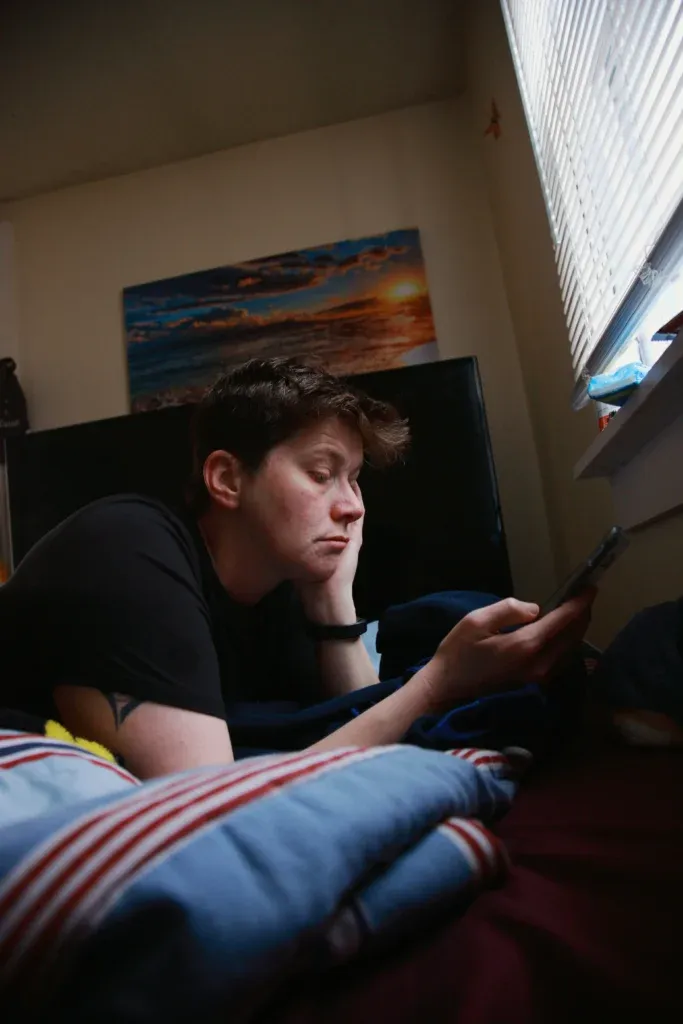
At 10 p.m. on a Tuesday night, a teenager is looking at their phone in the dark. No one is shouting, no one is pushing them, and there will be no visible trace of what they went through by the next morning. And yet, something inside them has broken.
Cyberbullying has one defining feature: it leaves no physical mark, and it doesn’t stop when school lets out. It follows the young person home, into their bedroom, even at night.
In Quebec, nearly one in seven young people is a victim of it. This is not a marginal phenomenon, and it affects 12 to 17 year olds more than any other age group.
This guide is for parents, professionals working with youth, and young people themselves. It presents current Quebec data, the warning signs worth paying attention to, the factors that genuinely offer protection, and how to open the conversation without putting anyone on the defensive.
Cyberbullying: what Quebec youth are experiencing
The figures come from two recent population surveys, and they align.
According to data compiled by the Institut national de santé publique du Québec, 13% of youth aged 12 to 17 reported experiencing cyberbullying in 2022, at least two to three times a month over the previous year. The Enquête québécoise sur la santé des jeunes du secondaire 2022-2023 paints a very similar picture, with 14% of students.
These experiences aren’t evenly distributed. The Canadian Health Survey on Children and Youth allows them to be ranked by frequency.
| Reported experience | Proportion of 12 to 17 year olds in Canada |
| Threats or insults online or by text message | 16% |
| Exclusion from an online community | 13% |
| Hurtful information posted about them | 9% |
Exclusion ranks second, right behind insults. This is an important point: the most common form of cyberbullying isn’t always the one that makes noise. Being removed from a group chat leaves little trace, but it hits hard at an age when group belonging shapes identity.
Another clear finding emerges from the research. Cyberbullying is closely linked to heavy internet use, particularly social media. Some studies point to a threshold of around three hours a day.
Why cyberbullying hits differently
Several features distinguish online bullying from its traditional form, and they compound one another.
It has no schedule. School, home, day, night: the young person remains reachable at all times. There’s no longer any place to set down their bag and breathe.
The audience is immediate and vast. A single act can be seen by hundreds of people within minutes. Researchers describe a snowball effect.
The information persists. A screenshot or a photo can resurface months later. This permanence extends the exposure well beyond the initial act.
Anonymity changes behavior. Some people who would never bully someone in person do it online. The screen provides a sense of power that doesn’t exist in a school hallway.
This last point is worth emphasizing with young people. A teenager can become a perpetrator of cyberbullying without recognizing themselves in that role, simply by taking part in a chain of messages that seems harmless to them.
The article on what to do when experiencing cyberbullying details concrete steps from the perspective of the person being targeted.
Signs that may indicate a young person is being targeted
A teenager rarely talks about what’s happening to them online, often out of fear that their phone will be taken away. This fear accounts for much of the silence.
Certain changes justify opening the door to a conversation:
- A strong emotional reaction after checking their phone, followed by withdrawal
- Suddenly abandoning a social media platform or online game used daily
- New behavior of hiding the screen when an adult approaches
- Sleep disturbances, or checking the phone in the middle of the night
- School absenteeism or a marked drop in performance
- Gradual withdrawal from friendships, both online and in person
- Self-deprecating comments that become more frequent or harsher
Any single one of these signs means little on its own. It’s their convergence, or an unusual shift in pattern, that deserves attention.

Factors that truly protect teenagers
Research has documented protective factors, and they form a useful map for both parents and school settings.
On the environment side, two elements stand out: a positive school climate and a sense of safety at school.
On the relationship side, four factors are documented: harmonious parent-child relationships, a positive family environment, parental supervision of technology use, and quality social relationships.
On the individual side, the protective factors are particularly interesting because they can be developed. These include empathy and emotional intelligence, solid self-esteem, prosocial behaviors, and good emotional regulation.
This last set deserves particular attention. It means that working on emotional regulation and the ability to put oneself in another’s shoes affects both the risk of being targeted and the risk of becoming a perpetrator. Low empathy is in fact among the factors associated with engaging in cyberbullying behavior.
The article on ways to develop empathy explores this lever in more detail.
Free research-based intervention tools are available for settings that want to structure their approach.
How to bring up the subject without putting a teenager on the defensive
Three principles come up consistently in documented practices.
Separate the conversation from the punishment
A young person who fears losing their device will stay silent. Stating upfront that the goal isn’t to confiscate anything changes the dynamic of the exchange.
Keep evidence before reacting
Dated screenshots make any follow-up action easier, whether reporting to the school or to the platform. Deleting messages in the heat of the moment deprives the family of its supporting evidence.
Widen the circle
Parental support and a sense of belonging at school lessen the effects of cyberbullying, including on suicidal ideation. Involving the school isn’t an escalation, it’s activating a protective factor.
What research says about the consequences
Documented consequences for targeted individuals include depressive symptoms, anxiety, lower self-esteem, psychological distress, withdrawal behaviors, and school absenteeism.
One clarification is needed on a sensitive point. Young people who experience or engage in cyberbullying show a higher risk of suicidal thoughts than others. However, studies do not establish a direct causal link, and this effect appears to be influenced by other factors such as stress and depression.
It should also be noted that cyberbullying remains a recent phenomenon that is still not well documented over the long term. The consequences studied so far are mostly those appearing in the months or the few years following the events.
Acting early against cyberbullying to change what comes next
Three things emerge from the data overall. Cyberbullying affects roughly one in seven young people in Quebec. It has a measurable impact on mental health. And the protective factors are largely within reach: the quality of the relationship, caring supervision of technology use, empathy, and emotional regulation.
Effective prevention doesn’t start with controlling devices. It starts with developing relational skills that serve young people everywhere, online and offline, and with environments where a young person knows they’ll be believed if they speak up.

To go further, videos and tools on emotional regulation and cyberbullying are available for free online, alongside listening services available at all times.
Frequently asked questions
According to the Étude québécoise sur les rapports sociaux, 13% of youth aged 12 to 17 reported being victims of cyberbullying in 2022, at least two to three times a month. The Enquête québécoise sur la santé des jeunes du secondaire arrives at a comparable picture, with 14% of students. This represents roughly one young person in seven in Quebec, a consistent order of magnitude.
This reaction is understandable, but it risks isolating the young person further and discouraging them from confiding next time. Taking away the device also cuts off access to their support network. Research points instead toward supervising technology use, which is among the documented protective factors, and toward preserving evidence before making any report to the school or the platform.
Certain acts committed online can constitute criminal offences, notably threats, criminal harassment, or the non-consensual distribution of intimate images. Others fall instead under school rules or platform terms of use. Reporting to police remains an option, and keeping dated screenshots greatly facilitates the process, regardless of the path the family chooses.