Bullying
Bullying: Definition, Forms and Signs to Recognize

A teenager who changes routes to avoid a hallway. A colleague who hasn’t spoken up in meetings for months. An older adult who no longer dares to go down to the common room of their residence.
These three situations may look completely unrelated. Yet they can stem from the same phenomenon, and having a precise definition of bullying is the only way to know for sure.
This guide covers the definition recognized in Quebec, the four forms the phenomenon can take, the three traits that set it apart from other kinds of aggression, and the warning signs worth paying attention to.
Bullying: the definition under Quebec law
Quebec has a legal definition, originally written into the Education Act. It was later carried into the Concerted Action Plan to Prevent and Address Bullying, then broadened to cover all areas of life.
According to the definition documented by the Institut national de santé publique du Québec, it refers to repeated actions, words, or behaviours, expressed directly or indirectly, including online, that occur within a context of unequal power and that cause distress to the targeted person.
One part of this definition often comes as a surprise: the actions can be intentional or not. Intent to harm is therefore not a required criterion.
In other words, a person can bully someone without being aware of it. A remark made to get a laugh from a group, or to protect one’s social status, produces the same effect on the targeted person.
This nuance carries real practical weight. It rules out closing an intervention with “it wasn’t meant that way.”
The four forms bullying can take
Bullying isn’t limited to visible actions. Four forms are generally documented, and the hardest to spot are rarely the most dramatic.
| Form | Examples of behaviour | Distinct feature |
|---|---|---|
| Physical | Pushing, tripping, holding someone back | The most visible, and so the most often reported |
| Verbal | Insulting, threatening, sexist remarks | Often dismissed as “just joking” |
| Social | Spreading rumours, humiliating, excluding from the group | Frequently goes unnoticed by adults |
| Material | Vandalizing, taking, or hiding someone’s belongings | Often wrongly seen as simple theft |
A further useful distinction applies to this typology. Bullying is direct when the actions target the person themselves, such as a physical blow or a message sent straight to them. It is indirect when it goes through third parties, such as spreading a rumour or sharing a photo within a group.
Indirect bullying, mostly social, is the type that most often slips past the notice of adults. It’s also the one that leaves the least verifiable trace.
Three traits that set it apart from other aggression
An unequal power dynamic
This is the deciding factor. The targeted person is in a position where defending themselves is difficult, which creates a sense of powerlessness.
This imbalance can stem from a difference in physical strength, social status, or age. It can also come from norms specific to a setting, a classroom, or a team.
Repetition of the behaviour
The same action recurring over several weeks counts as repetition. But there’s a less obvious case: several different people, each doing the same thing once, toward the same target.
Taken individually, these actions may seem harmless. Added together, they genuinely amount to bullying for the person experiencing them.
An effect that causes harm
Regardless of the intent behind the action, the documented effect is the same: harm, hurt, oppress, or exclude. It’s this effect, not the motivation, that defines the situation.
What isn’t bullying
A conflict involves two parties with comparable power, both able to express their point of view. Bullying doesn’t work that way. The distinction isn’t cosmetic: it completely changes the kind of intervention that’s appropriate.
A conflict is resolved through mediation and finding common ground. Applying that same approach to a bullying situation means asking the person in the weaker position to negotiate with the one who dominates them.
This confusion is common and worth exploring further. The article on the distinction between bullying and conflict (in French) goes deeper into this question.
Research-based intervention tools are available free of charge for organizations that want to structure their approach.
Signs worth paying attention to
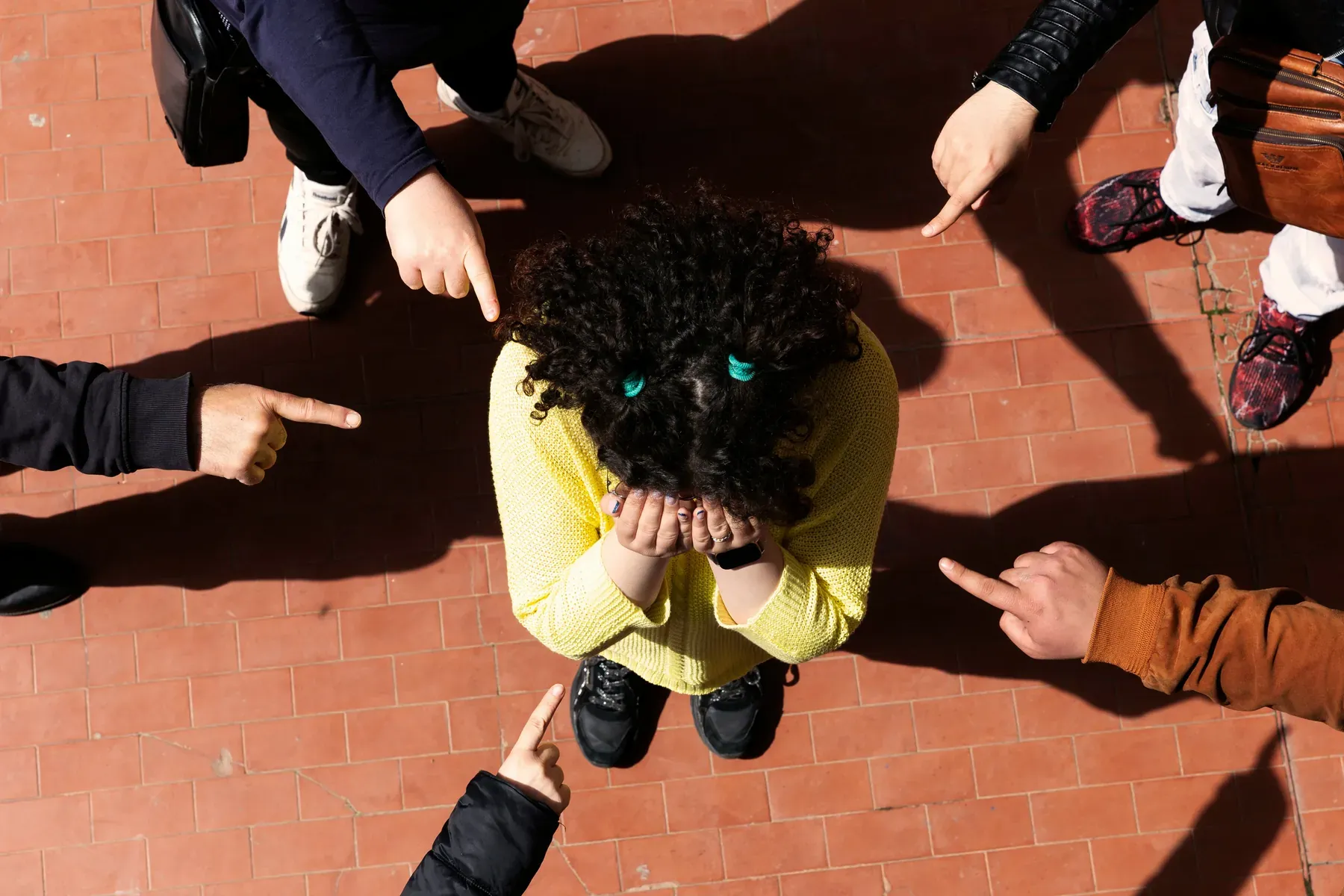
People who experience bullying rarely bring it up on their own. Shame, fear of retaliation, and fear of not being believed largely explain this silence.
Certain changes can serve as a starting point for a conversation:
- Suddenly avoiding a place, a route, or an activity they used to enjoy
- Losing personal items or having damaged clothing with no clear explanation
- Withdrawing socially and gradually pulling away from friends or family
- An unexplained drop in school or work performance
- Sleep problems, or recurring stomachaches or headaches
- Unusual irritability, or conversely, becoming noticeably withdrawn
- Visible reluctance to explain a specific incident
None of these signs is proof on its own. It’s when they accumulate, or appear together, that they justify checking in further with the person concerned.
The decisive role of bystanders
Bullying very often happens in front of witnesses. Their reaction carries significant weight in what happens next.
A bystander can encourage the behaviour, join in, defend the targeted person, report the situation, or do nothing. That last option isn’t neutral: staying silent is frequently read by the person bullying as a form of approval.
Working with bystanders is therefore a prevention lever just as important as working with those directly involved.
Possible consequences, and caution in interpreting them
People who experience bullying can feel insecure and anxious, develop low self-esteem, anxiety, or depressive symptoms.
One caution is worth stating clearly. Studies examining the link between bullying and suicide do not establish a cause-and-effect relationship. Suicide stems from multiple causes, and bullying is an associated factor rather than a single cause.
Prevalence statistics should also be read with caution. Measurement methods vary widely from one study to another, which can lead to overestimating the scale of the phenomenon.
Naming bullying to defuse it
Precisely defining bullying makes it possible to determine whether a situation should be treated as a simple disagreement or as a power dynamic that needs to be stopped.
Three markers are enough to settle most cases: a power imbalance, repeated behaviour, and a harmful effect. When all three are present, the intervention needs to protect before trying to reconcile.
Quebec’s legal framework supports this approach. In schools, every elementary and secondary institution must have a complaint mechanism and an action plan. In workplaces, employers carry a duty to prevent it. Éducaloi outlines the recourses available depending on the context (in French), including situations where the behaviour may constitute a criminal offence.

To learn more about bullying and its effects, this mental health and well-being resource platform brings together videos, practical tools, and listening services available at all times.
Frequently asked questions
Repetition is part of the definition of bullying recognized in Quebec, so a single incident generally doesn’t fall into this category. That doesn’t make it acceptable, though. An isolated act can still be an assault, a threat, or a criminal act, and it deserves a response. Repetition can also come from several different people doing the same thing to the same target.
The two terms are often used interchangeably. Harassment mainly refers to a specific legal framework, particularly in the workplace, where Quebec law governs psychological harassment. Bullying applies to every area of life under the government’s action plan. In practice, the behaviours described largely overlap, and the choice of word changes little about the intervention needed.
In schools, every elementary and secondary school must have a complaint mechanism and an action plan. At work, employers have a legal duty to prevent it. For immediate support, Info-Social 811 offers confidential psychosocial consultation at any time, and Kids Help Phone supports young people. Reporting to police is possible if the behaviour constitutes a crime.